

Photo / TexasN
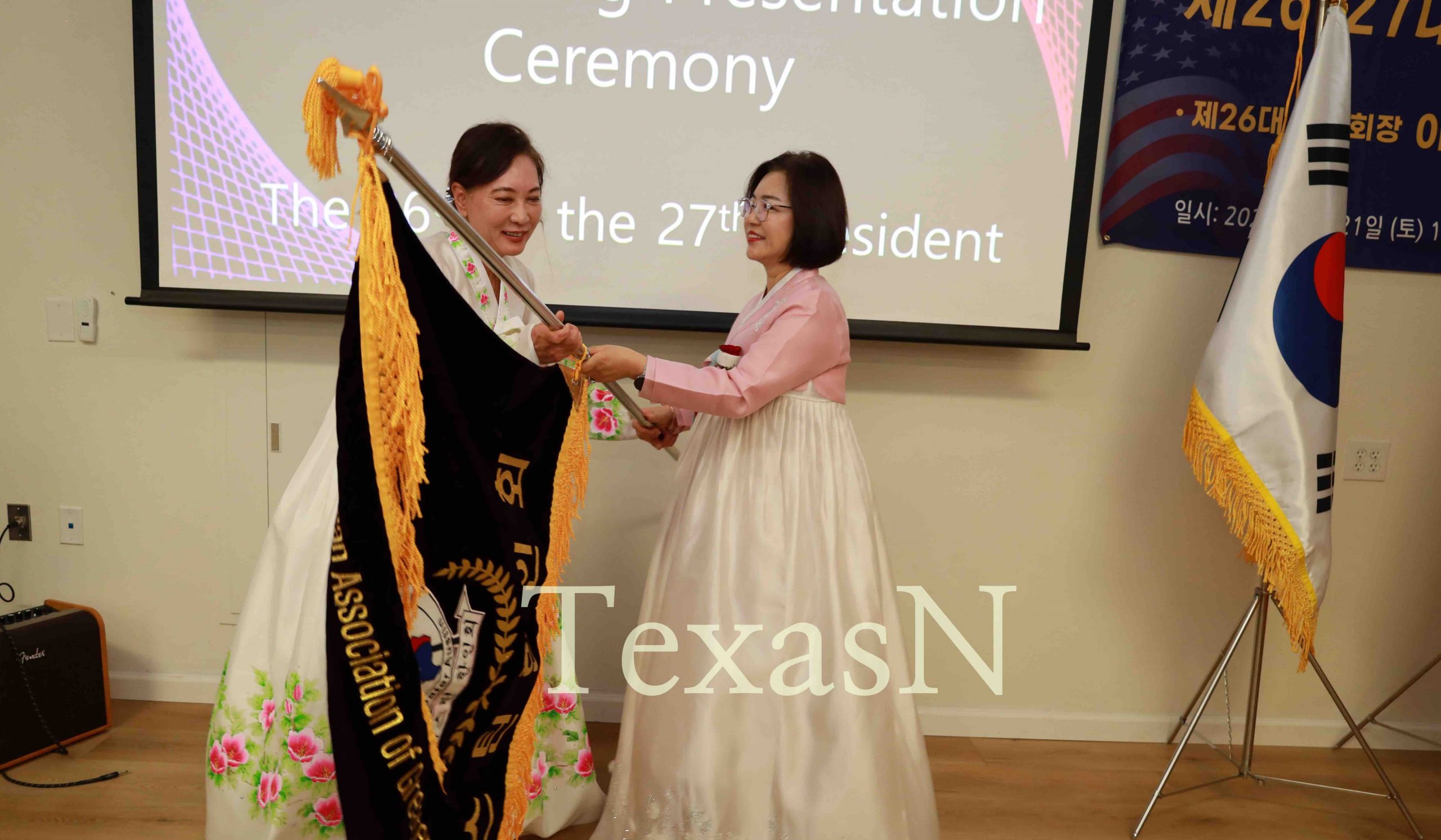
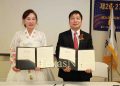
Former Korean American Association of Greater Austin President Lee Ok-hee (right) hands over the association flag to newly inaugurated President Kang Susie (left).
[AUSTIN =TexasN] The Korean American Association of Greater Austin (KAAGA) formally installed Kang Susie as its 27th president on Saturday, signaling a new phase of organizational expansion aligned with Austin’s fast-growing technology economy and the broader Texas Korean American network.
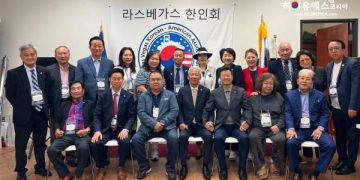
The inauguration and farewell ceremony, held at the Austin Korean Cultural Center, marked the transition from outgoing President Lee Ok-hee to Kang. The event drew community leaders from across Austin as well as Korean American association representatives from major Texas metros and other U.S. cities, underscoring the organization’s expanding regional footprint.
In her inaugural address, Kang laid out a forward-looking agenda centered on what she described as “a community we build together and grow together.” Her platform outlined five strategic priorities: stronger inter-organizational collaboration, transparent governance, next-generation leadership development, localization of Korean culture, and structured engagement with major Korean corporate stakeholders in Central Texas.
Governance and Transparency
Kang pledged to strengthen coordination with other Korean American groups in the Austin area through regular consultations and collaborative programming. She also committed to formalizing financial reporting processes and expanding the association’s digital presence, including website and social media upgrades, to improve transparency and accessibility.
Next-Generation Pipeline
A key component of the new administration’s strategy involves cultivating emerging leaders. Kang said KAAGA will deepen partnerships with Korean students and young professionals at the University of Texas at Austin and other regional institutions. The goal is to broaden participation among second-, third- and fourth-generation Korean Americans while creating mentorship pathways linked to Austin’s innovation ecosystem.
Aligning with Austin’s Tech Economy
As Austin continues to solidify its position as a semiconductor and advanced technology hub — bolstered by Samsung’s multi-billion-dollar investments in Austin and nearby Taylor — Kang emphasized the importance of structured engagement with Korean corporations and their supplier networks.
She announced plans to form a task force focused on workforce development, construction, infrastructure and related sectors, aiming to create “practical win-win models” between the Korean American community and the region’s industrial growth.
Cultural Strategy and Mainstream Integration
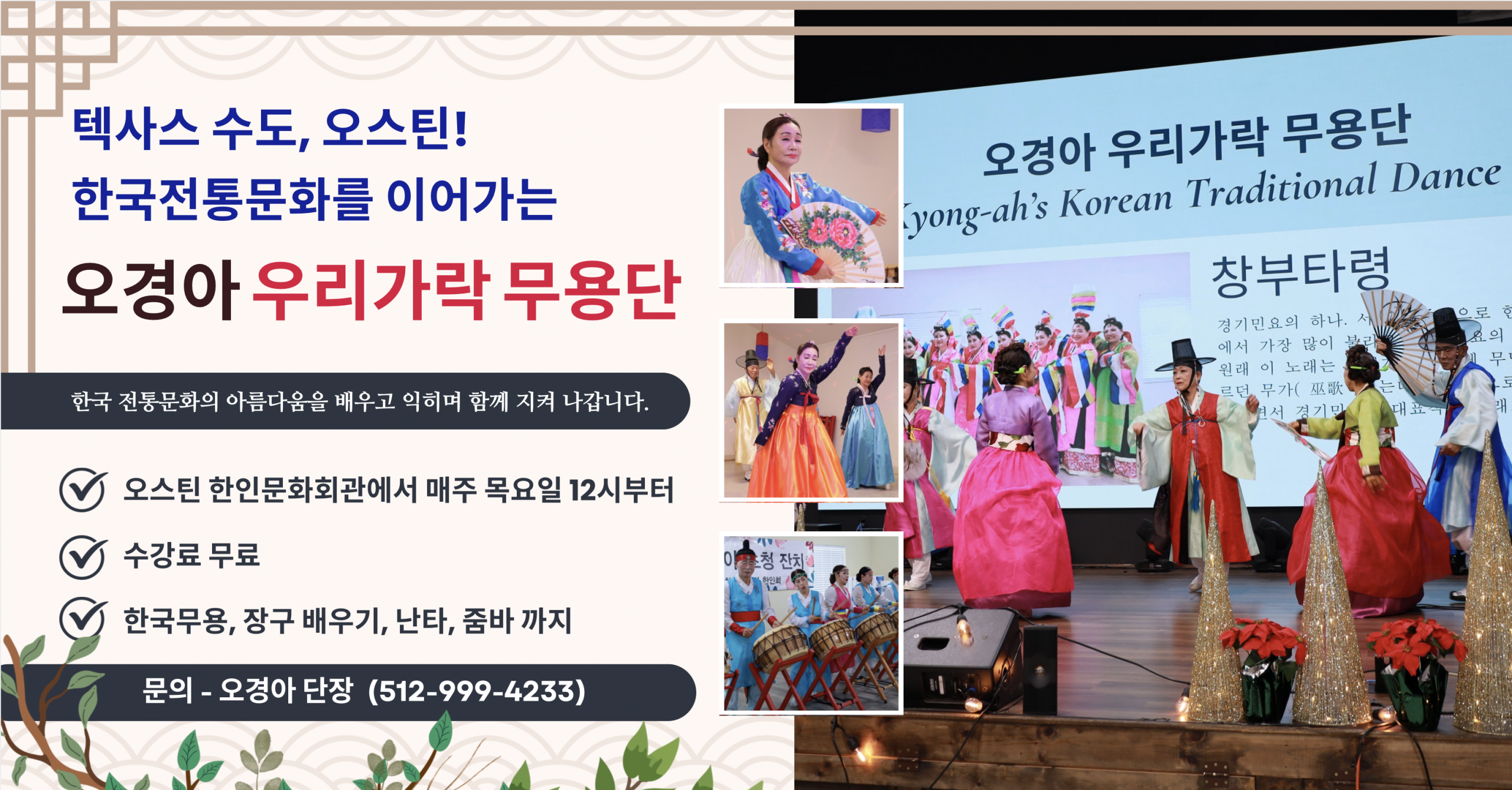
Kang also positioned K-culture as a strategic asset. She said the association will work with the City of Austin and other institutions to integrate Korean cultural programming into the broader civic landscape, moving beyond community-centered events to initiatives that engage the mainstream public.
“Having lived in Austin for more than 20 years, I’ve seen firsthand the growth potential of our community,” Kang said. “We will work to ensure that Korean Americans here become a central force contributing to regional unity, U.S.-Korea economic cooperation and the continued global expansion of Korean culture.”
Diplomatic and National Community Support

Choi In-taek, Deputy Consul General at the Consulate General of the Republic of Korea in Houston, attended the ceremony and highlighted Austin’s rising profile.
“Austin is not only the capital of Texas but also a rapidly emerging center for IT and semiconductors, drawing attention from Korea and around the world,” Choi said. He credited Korean companies, including Samsung, along with local Korean Americans for contributing to the region’s growth, and pledged continued support from the consulate.
The event also featured remarks from Seo Jeong-il, president of the Federation of Korean Associations, USA. Seo noted that more than 180 Korean American associations operate nationwide and that the federation represents approximately 2.7 million Korean Americans. He described Kang as a long-time community advocate who had “earned this role through years of dedication and preparation.”
Leaders from Dallas, Houston, El Paso and San Antonio were also in attendance, signaling a broader commitment to intercity collaboration across Texas. Participants reaffirmed plans to strengthen cooperation among regional associations as the Korean American population grows alongside Texas’ economic expansion.
With Austin positioned at the intersection of advanced manufacturing, AI and global investment flows, KAAGA’s new leadership is aiming to align community development with the city’s evolving economic landscape — a strategy that places civic engagement, workforce integration and cultural diplomacy at the center of its next chapter.
Catherine Wahrmund amiangs0210@gmail.com





![[영상] 중앙선관위 재외선거 신고신청 유튜브 제작 배포](https://texasn.com/wp-content/uploads/2025/04/Screenshot-2025-04-11-at-10.23.08 AM-120x86.png)