



Mayor Kirk Watson honors the Korean alphabet’s historical significance and the Korean American community’s contributions to Austin
Catherine Wahrmund amiangs0210@gmail.com
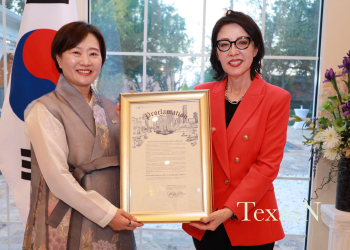
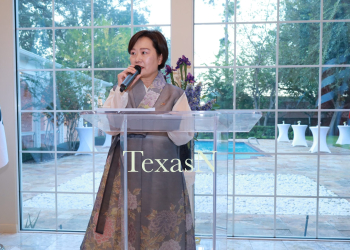
[AUSTIN= TexasN] Austin Mayor Kirk Watson has officially proclaimed Oct. 9, 2026, as “Hangeul Day” in the city, recognizing the historical and cultural significance of the Korean alphabet and the contributions of Austin’s Korean American community.
The proclamation, signed by Watson and bearing the city’s official seal, highlights Hangeul’s role in expanding literacy, promoting education and making knowledge more accessible.
First promulgated in 1446 by King Sejong the Great, Hangeul was designed to make reading and writing more accessible to people across Korean society.
In the proclamation, the city describes Hangeul as an internationally recognized achievement in linguistic design, known for its accessibility, intuitive structure and visual harmony.
The declaration also acknowledges the Korean American community’s role in shaping Austin’s cultural and civic life.
According to the proclamation, Korean Americans have made valuable contributions to the city’s arts, education, innovation, culinary scene and civic engagement.
The city said recognizing Hangeul Day helps strengthen Austin’s international relationships, promote cultural understanding and encourage connections among communities around the world.
The proclamation also emphasizes Austin’s commitment to diversity, literacy and cross-cultural education as essential elements of an inclusive, globally connected city.
“I, Kirk Watson, Mayor of the City of Austin, Texas, do hereby proclaim October 9th, 2026 as Hangeul Day in Austin,” the official declaration states.
This year’s recognition carries additional historical significance.
The year 2026 marks the 580th anniversary of the promulgation of Hunminjeongeum, the original name of the Korean writing system, and the centennial of the first organized observance of the holiday in 1926, originally known as Gagyanal.
The proclamation represents an official recognition of Korean linguistic and cultural heritage while acknowledging the Korean American community’s contributions to Austin’s growth and diversity.
It also reflects the city’s broader commitment to celebrating the cultural traditions that contribute to Austin’s identity as an international community.